Health education competence, self-management
A systematic literature review shows that six competence areas play a key role in enabling health personnel to give patients and service users good outcomes from self-management programmes.
A systematic literature review shows that six competence areas play a key role in enabling health personnel to give patients and service users good outcomes from self-management programmes.
In the last twenty years, PhD theses in nursing science at the University of Oslo (UiO) have changed in terms of methodology, authorship and theoretical approach. Has the research become less patient-centred and patient-oriented?
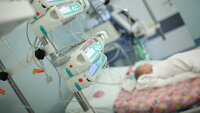
It is challenging to treat children in a general intensive care unit intended for adults. Good training, good cooperation, and fulfilling children’s needs are valuable measures.
More and more studies are examining systems for early detection of clinical deterioration in non-hospital settings, but few have focused on older people and primary care.
Nurses, social educators and pharmacists have reached a consensus on 77 standards for best practice in medication management in the nursing and care service.
They are ever on the alert vis-à-vis their daughter, suffer loneliness and feel that the eating disorder is taking over their home.
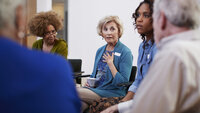
Course participants learn to shift their attention from disease to health, from a critical to an accepting attitude about themselves, and from despair to hope and belief in their own ability to cope.
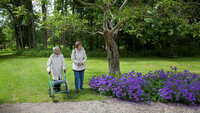
Nursing home residents are dissatisfied with a sedentary life indoors and reach out more to others socially when they are outdoors. Nevertheless, they have little contact with nature and the outdoor environment.
Following the introduction of the Coordination Reform, nurses employed by the municipal health service have had to deal with a growing number of complex, patient-focused tasks. The need for professional development is considerable, but there is no overall strategy in place.
People with genetic aortopathies should be given information on their diagnosis and support to find safe, enjoyable activities. Many also need psychosocial support.