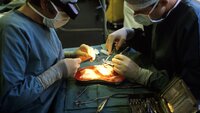
Daily life after a kidney-pancreas transplantation
A successful kidney-pancreas transplantation improves and stabilises patients’ daily lives. It also brings with it new elements of uncertainty that are important to convey to the patient.
A successful kidney-pancreas transplantation improves and stabilises patients’ daily lives. It also brings with it new elements of uncertainty that are important to convey to the patient.
The Norwegian translation is appropriate for exploring postoperative symptoms in patients following day surgery. The language, instructions and scoring are comprehensible as well.
Seriously ill patients require more medical-technical assistance and care. More nurses should have the opportunity to study Advanced Clinical Practice.
The recently developed app APPETITT can inspire to a varied diet and increase the attention to dietary habits for home-dwelling elderly.
Interventions such as reminders, direct observations and hand hygiene facilitation lead to fewer outbreaks.
The study’s informants were particularly apprehensive about critical emergencies and unsure how to use medical equipment such as bag valve masks.
The organisational form results in RNs working in greater isolation, and this may mean that their professional competence stagnates. The parents become the experts on the child – not the RNs.
Patients move quickly between different units during the surgical pathway. Older patients in particular are at risk of suffering related to care such as violations of dignity, neglect and poor pain management.
While the illness is potentially life-threatening, it is invisible and not well known. Consequently, patients may be mistrusted and ignored, and they may feel inferior, vulnerable and insecure.
Registered nurses and doctors should base their assessments of whether to stop parenteral nutrition on inter-disciplinary collaboration and competencies, with particular emphasis on experience-based knowledge.