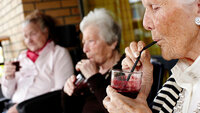
High-energy smoothies for patients in nursing homes
Health personnel find that high-energy smoothies do not always have the intended effect. Some patients become obstipated or nauseous, and undernourished patients do not gain weight.
Health personnel find that high-energy smoothies do not always have the intended effect. Some patients become obstipated or nauseous, and undernourished patients do not gain weight.
Healthcare personnel need more knowledge regarding hearing loss and communication with deaf people. In addition, some healthcare personnel have negative attitudes towards this patient group.
They observe eye contact, comforting and other behaviours based on experience rather than by making use of recognised instruments. Their assessments are influenced by professional development opportunities, a heavy workload and interdisciplinary collaboration.
When ESAS is routinely used to map symptoms, the patients experience greater symptom relief and a better quality of life. However, not everyone uses the tool systematically.
Public health nurses make active use of the International Child Development Programme (ICDP) in their work to improve the interaction between parents and children.
Nurses’ psychosocial challenges are transformed into something private and personal instead of being solved at an overarching level in the organisation.
Different perspectives on what to prioritise, characterise the cooperation.
Recruitment to the Cardiac Rehabilitation Programme seems to be somewhat random and ‘the main concern is to get the patients on the list’. Health professionals should communicate better among themselves and prepare guidelines for recruitment.
Simulation-based team training improves quality of patient care, but the training should be a planned activity.
Sykepleiere med master i anestesi- og intensivsykepleie vil styrke helseteamets samlede kompetanse og bidra til økt pasientsikkerhet.