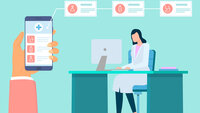
Health professionals’ expectations of e-consultations – a qualitative study
It will be more difficult to observe patients and perform clinical assessments. Nor do all patients have sufficiently good digital skills or adequate health literacy.
It will be more difficult to observe patients and perform clinical assessments. Nor do all patients have sufficiently good digital skills or adequate health literacy.
Patients dream of a living space with a predictable daily structure and clear organisation, where they receive individually tailored care and treatment, and where healthcare personnel enter into health-promoting relationships with them.
Healthcare personnel can make decisions about the admission basis and treatment needs or hold care coordination meetings with the service user, and the community mental health centre and municipalities can establish accountability or negotiate responsibility, and determine which measures to implement.
They feel like a burden on resources and have a need for care and real co-determination.
The RPM tool is flexible for both nurses and patients and can have a positive impact on the relationship. But it can also cause extra work.
A successful kidney-pancreas transplantation improves and stabilises patients’ daily lives. It also brings with it new elements of uncertainty that are important to convey to the patient.
The Norwegian translation is appropriate for exploring postoperative symptoms in patients following day surgery. The language, instructions and scoring are comprehensible as well.
Seriously ill patients require more medical-technical assistance and care. More nurses should have the opportunity to study Advanced Clinical Practice.
The recently developed app APPETITT can inspire to a varied diet and increase the attention to dietary habits for home-dwelling elderly.
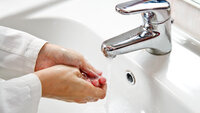
Interventions such as reminders, direct observations and hand hygiene facilitation lead to fewer outbreaks.