How to ensure safe and appropriate medication management
Nurses, social educators and pharmacists have reached a consensus on 77 standards for best practice in medication management in the nursing and care service.
Nurses, social educators and pharmacists have reached a consensus on 77 standards for best practice in medication management in the nursing and care service.
Helath personnel can learn from the pain team when they have pharmacology-related questions and are drawing up treatment plans, and when they are establishing open and trusting relations with the patient.
New reforms and time-consuming tasks such as cleaning, preparing food and poor ICT solutions mean that nurses give less priority to safety measures in connection with medication management.
Many were redeployed to basic nursing roles and ancillary functions.
The RPM tool is flexible for both nurses and patients and can have a positive impact on the relationship. But it can also cause extra work.
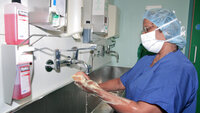
Scrub nurses were better than surgeons at following the recommended length of time and techniques for surgical hand washing and hand antisepsis.
Improved knowledge, adaptive frameworks and cooperation are essential for adapting patient and family education to appropriate health literacy levels.
Simulation-based team training improves quality of patient care, but the training should be a planned activity.
Following the introduction of the Coordination Reform, nurses employed by the municipal health service have had to deal with a growing number of complex, patient-focused tasks. The need for professional development is considerable, but there is no overall strategy in place.
The registered nurses who participated in the ‘Four Habits Model’ communication skills course became more aware of asking open-ended questions, actively listening and structuring their conversations with patients.