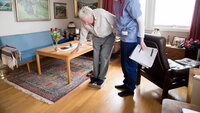
Co-ordinated collaborative meetings as patients transition from the psychogeriatric health service
Collaborative interdisciplinary meetings may increase the mutual respect between health professionals and provide more knowledge about the patient.
Collaborative interdisciplinary meetings may increase the mutual respect between health professionals and provide more knowledge about the patient.
Fatigue, dry mouth and loss of appetite are the most distressing symptoms, according to a screening with the ESAS tool.
The instrument measures the collaboration between healthcare personnel and the relatives of frail elderly patients in acute hospital wards. Having a Norwegian version of the instrument will mean it can be used in our clinical practice and research.
30–60 per cent of older adults in hospitals and nursing homes are malnourished. A well-suited screening tool is to detect the persons who are at risk of malnutrition.
Weight is one of the simplest measurements of nutritional status. Nevertheless, a number of personnel in the community nursing services lack knowledge about nutrition and good routines for weighing patients.
They are ever on the alert vis-à-vis their daughter, suffer loneliness and feel that the eating disorder is taking over their home.
Healthcare personnel in interdisciplinary teams believed that registered nurses made a distinct and recognised contribution to the collaborative effort. In particular, they valued the registered nurses’ somatic knowledge and their milieu therapy expertise.
Tidsskriftet Sykepleien Forskning er et vitenskapelig tidsskrift som blir utgitt fire ganger i året. Vi ønsker å være den foretrukne kanal for å formidle sykepleieforskning i Norge, men retter oss også mot lesere i Norden. Sykepleien Forskning har som mål å være relevant, interessant, praksisnært og bredt. Vi vil også bidra til at helsepersonell leser forskning og bruker forskningsresultater i teori og i praksis.
I møte med døende pasienter trenger sykepleiere mer enn teori- og prosedyrekunnskaper.