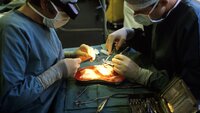
Daily life after a kidney-pancreas transplantation
A successful kidney-pancreas transplantation improves and stabilises patients’ daily lives. It also brings with it new elements of uncertainty that are important to convey to the patient.
A successful kidney-pancreas transplantation improves and stabilises patients’ daily lives. It also brings with it new elements of uncertainty that are important to convey to the patient.
Almost 84% of people over the age of 70 used a computer, smartphone or tablet to maintain contact with their friends and social networks. Only 8% used these media to contact healthcare personnel.
While the illness is potentially life-threatening, it is invisible and not well known. Consequently, patients may be mistrusted and ignored, and they may feel inferior, vulnerable and insecure.
They are ever on the alert vis-à-vis their daughter, suffer loneliness and feel that the eating disorder is taking over their home.
Healthcare personnel find that they are better equipped to receive and treat trauma patients after taking the Course in Trauma Nursing.
It may be beneficial to screen at-risk individuals for depressive symptoms and recognise that they may need more support from healthcare personnel.
Young girls want information about bleeding and irregular bleeding in relation to use of the contraceptive pill.
Registered nurses in Norwegian sexual assault reception centres participate in or perform all tasks in the emergency treatment of victims of sexual assault, including forensic tasks.
A large proportion of the residents at nursing homes did not receive a medication review when they were admitted, despite this being a statutory requirement.
Course participants learn to shift their attention from disease to health, from a critical to an accepting attitude about themselves, and from despair to hope and belief in their own ability to cope.