Ethical reflection and awareness in supervision
Nurses can experience moral stress and feel a sense of shame when they are torn between a patient’s needs and the requirements of the treatment system. Ethical reflection in supervision can help.
Nurses can experience moral stress and feel a sense of shame when they are torn between a patient’s needs and the requirements of the treatment system. Ethical reflection in supervision can help.
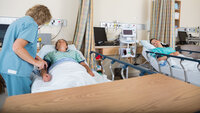
Mobile intensive care nurses are called out to hospital wards when a patient’s condition is showing signs of deterioration. When are they called out, and what measures do they initiate?
The father’s role has changed, and fathers have become more active as regards childcare. Nevertheless, they may feel excluded during pregnancy, childbirth and follow-up at the child health centre.
Patients fail to turn up for their treatment in private institutions if they feel inadequately involved, suffer dwindling motivation or feel pressurised into accepting the treatment.
The teaching assistants were second-year students themselves, and used academic competence, social engagement and creative methods. This made it easier for the nursing students to learn complex academic material.
Diabetes specialist nurses have a strong feeling of responsibility for the patient and find it challenging to keep up to date with all the functions of some of the insulin pumps.
The Multidimensional Dyspnea Profile is the first instrument in Norwegian that measures multiple dimensions of dyspnoea, regardless of underlying medical conditions.
Different perspectives on what to prioritise, characterise the cooperation.
30–60 per cent of older adults in hospitals and nursing homes are malnourished. A well-suited screening tool is to detect the persons who are at risk of malnutrition.
Video communication technology used in the context of reablement / telerehabilitation can facilitate access to nursing staff in a municipality, and enable users to stay at home longer.