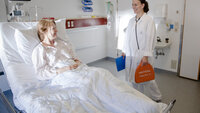
Parenteral nutrition at the end of life
Registered nurses and doctors should base their assessments of whether to stop parenteral nutrition on inter-disciplinary collaboration and competencies, with particular emphasis on experience-based knowledge.
Registered nurses and doctors should base their assessments of whether to stop parenteral nutrition on inter-disciplinary collaboration and competencies, with particular emphasis on experience-based knowledge.
There was no correlation between the total score for frailty measured by Share-FI and cognitive tests.
Heart disease increases the risk of depression. How can we best identify depressed cardiac patients?
Women with recurrent ovarian cancer endure their disease by finding solace in the hope of recovery. How can nurses provide consolation?
The RPM tool is flexible for both nurses and patients and can have a positive impact on the relationship. But it can also cause extra work.
Makten og avmakten som ligger i rollene der legen er ekspert og pasienten hjelpetrengende, påvirker kommunikasjonen og samhandlingen under legevisitten.
The patient’s experience of breathlessness often do not correspond with the seriousness of the condition.
Nurses with Norwegian as their mother tongue use a larger, and more nuanced repertoire in handover reports than those with Norwegian as a second language. However, they document numerical information in almost the same way.
Teenage children’s diabetes diagnoses are an enormous emotional strain on mothers. They need support from healthcare personnel to cope with the stressful situation.
It may be beneficial to screen at-risk individuals for depressive symptoms and recognise that they may need more support from healthcare personnel.