Student assistants contribute to learning in anatomy, physiology and biochemistry
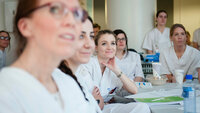
Student assistants taught the students in small groups and helped them to gain a better understanding of the subject content and inspired them to learn.
Student assistants taught the students in small groups and helped them to gain a better understanding of the subject content and inspired them to learn.
Mothers who engaged with the ‘New families’ home visit programme, had more frequent contact with child health centres. But more than a third of all the mothers reported that they had received inadequate information from public authorities about the child health centre’s services.
Healthcare personnel found it challenging to judge what was in the child’s best interest. The child’s right to autonomy and involvement was often not heeded, and the child was rarely included in the decision-making process.
Following the introduction of the Coordination Reform, nurses employed by the municipal health service have had to deal with a growing number of complex, patient-focused tasks. The need for professional development is considerable, but there is no overall strategy in place.
It is challenging for community nurses to screen their patients’ nutritional risk because the guidelines fail to take sufficient account of the domestic arena.
Most of those who work part time choose to do so for reasons of lifestyle or family values. However, sociable working hours and professional challenges may provide the motivation required for some to increase their full-time equivalent percentage.
Healthcare personnel find that they are better equipped to receive and treat trauma patients after taking the Course in Trauma Nursing.
Healthcare personnel can make decisions about the admission basis and treatment needs or hold care coordination meetings with the service user, and the community mental health centre and municipalities can establish accountability or negotiate responsibility, and determine which measures to implement.
Healthcare personnel in interdisciplinary teams believed that registered nurses made a distinct and recognised contribution to the collaborative effort. In particular, they valued the registered nurses’ somatic knowledge and their milieu therapy expertise.
Anaesthesiology and intensive care nursing are regarded as practice-oriented professions. Can a master’s degree provide an equally high level of skill and theoretical knowledge as specialist training?