The importance of motivation for the quality of next-of-kin involvement – a qualitative study of managers and employees in primary care services
Belonging to a team, flexibility and good systems for next-of-kin involvement create motivation.
Belonging to a team, flexibility and good systems for next-of-kin involvement create motivation.
Different perspectives on what to prioritise, characterise the cooperation.
Inspirational practical training entails peer mentoring by third-year students. This provides a better understanding of the complexity of nursing and the relevance of the profession.
Public health nurses consider themselves to be adept at finding and assessing national guidelines, but feel less proficient at assessing research-based knowledge.
They observe eye contact, comforting and other behaviours based on experience rather than by making use of recognised instruments. Their assessments are influenced by professional development opportunities, a heavy workload and interdisciplinary collaboration.
Norwegian health care personnel find the systematic follow-up of care pathways and the collaboration with the primary health service to be poorer than other organizational areas.
Nurses can experience moral stress and feel a sense of shame when they are torn between a patient’s needs and the requirements of the treatment system. Ethical reflection in supervision can help.
At the University of Tromsø, first year students in nursing homes are supervised by final year students in order to strengthen their occupational competence in nursing leadership.
Ensuring a good patient trajectory is difficult. In order to be successful, it is essential that all healthcare professionals involved have a close, trust-based cooperation, also with patients and their families.
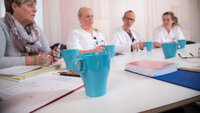
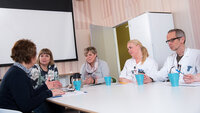
Collaborative interdisciplinary meetings may increase the mutual respect between health professionals and provide more knowledge about the patient.