Inadequate medication reconciliation in hospitals
Although there are procedures for medication reconciliation, the process is challenging to implement and the allocation of responsibility is unclear.
Although there are procedures for medication reconciliation, the process is challenging to implement and the allocation of responsibility is unclear.
Anaesthesiology and intensive care nursing are regarded as practice-oriented professions. Can a master’s degree provide an equally high level of skill and theoretical knowledge as specialist training?
They should be on the lookout for risk factors such as functional impairment, loneliness, changing roles and the feeling of being a burden.
De-escalation training improved students’ de-escalation skills and boosted their confidence in coping with patient aggression.
The scales IC-RDOS and MV-RDOS had ‘very good‘ inter-rater reliability.
Parents who unexpectedly have a child with Down’s syndrome can interact with the child in a more constructive way when healthcare personnel talk to them in a positive manner immediately following the birth.
Practice supervisors are of the opinion that the students need specially adapted arrangements for hospital work placements in order to complete their education.
Measures such as the ‘getting-to-know-you’ day, the ‘float nurse’ function at an early stage, group meetings and internal training greatly benefitted supervisors and students at Oslo University Hospital.
Only one guideline detailed a practical and systematic set-up of instrument tables.
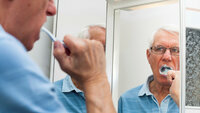
Inadequate post-stroke follow-up of dental health led to reduced oral health and loss of teeth. Better interdisciplinary follow-up could probably have prevented it.