Co-ordinated collaborative meetings as patients transition from the psychogeriatric health service
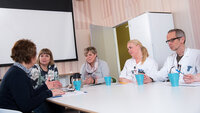
Collaborative interdisciplinary meetings may increase the mutual respect between health professionals and provide more knowledge about the patient.
Collaborative interdisciplinary meetings may increase the mutual respect between health professionals and provide more knowledge about the patient.
Involving a user and a professional translator may be appropriate when an instrument is translated and adapted to another culture.
The scales IC-RDOS and MV-RDOS had ‘very good‘ inter-rater reliability.
30–60 per cent of older adults in hospitals and nursing homes are malnourished. A well-suited screening tool is to detect the persons who are at risk of malnutrition.
They should be on the lookout for risk factors such as functional impairment, loneliness, changing roles and the feeling of being a burden.
De-escalation training improved students’ de-escalation skills and boosted their confidence in coping with patient aggression.
Guidelines that were not regarded as professionally sound, logical and relevant or in keeping with one’s own clinical experiences or feelings were more difficult to follow.
Registered nurses noted a greater number of clinical signs of infection in infants with catheter-related bloodstream infections (CRBSI) than in infants without such infections. However, not all observations were documented.
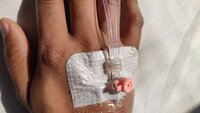
Some problems with PIVCs increased during the pandemic, such as the occurrence of purulence and loose dressings.
Patients and their caregivers experience less anxiety and worry. Healthcare personnel also had positive experiences with the telemedicine service.