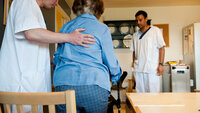
Nurse managers’ importance for the learning environment of student nurses in nursing homes
By adopting a new supervision model, nurse managers acquired more positive attitudes towards students and started paying more attention to nursing issues.
By adopting a new supervision model, nurse managers acquired more positive attitudes towards students and started paying more attention to nursing issues.
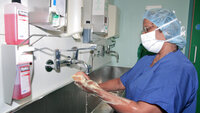
Scrub nurses were better than surgeons at following the recommended length of time and techniques for surgical hand washing and hand antisepsis.
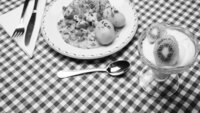
The recently developed app APPETITT can inspire to a varied diet and increase the attention to dietary habits for home-dwelling elderly.
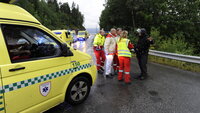
Healthcare personnel, the police and the fire and rescue service, as well as voluntary groups, felt that they were supported by management, worked well together and shared a sense of pride in their efforts.
Public health nurses make active use of the International Child Development Programme (ICDP) in their work to improve the interaction between parents and children.
Deficient documentation of falls may stop the implementation of necessary preventive interventions. The nursing homes in the study are nevertheless failing to comply with their own documentation requirements.
Body temperature was measured differently and the routines were not the same. Provision should be made for a practice ensuring that staff have the necessary equipment and time to prevent inadvertent perioperative hypothermia.
The Multidimensional Dyspnea Profile is the first instrument in Norwegian that measures multiple dimensions of dyspnoea, regardless of underlying medical conditions.
Registered nurses and doctors should base their assessments of whether to stop parenteral nutrition on inter-disciplinary collaboration and competencies, with particular emphasis on experience-based knowledge.
There is a considerable gap between the health authorities’ recommended minimum norm for school nurse staffing and the actual figures at most schools in Norway.