Nutritional screening in home-based nursing care can be improved
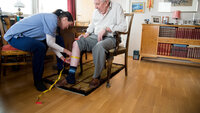
In order to meet the challenges associated with undernutrition in elderly patients who receive home-based nursing care, it is necessary to screen for nutritional status.
In order to meet the challenges associated with undernutrition in elderly patients who receive home-based nursing care, it is necessary to screen for nutritional status.
Fatigue, dry mouth and loss of appetite are the most distressing symptoms, according to a screening with the ESAS tool.
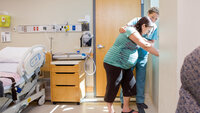
Few midwives followed the recommendations for defining active labour in the electronic medical records. It is uncertain how many women in labour were continuously monitored by a midwife.
Video communication technology used in the context of reablement / telerehabilitation can facilitate access to nursing staff in a municipality, and enable users to stay at home longer.
Teenage children’s diabetes diagnoses are an enormous emotional strain on mothers. They need support from healthcare personnel to cope with the stressful situation.
Nurses are better at using their professional knowledge and applying research in their work following postgraduate study in evidence-based practice (EBP). Their belief in the value of such work also increases.
It will be more difficult to observe patients and perform clinical assessments. Nor do all patients have sufficiently good digital skills or adequate health literacy.
It may be beneficial to screen at-risk individuals for depressive symptoms and recognise that they may need more support from healthcare personnel.
Healthcare personnel who interact with patients and their families can learn from the families’ experiences when a loved one is affected by dementia.
A successful kidney-pancreas transplantation improves and stabilises patients’ daily lives. It also brings with it new elements of uncertainty that are important to convey to the patient.