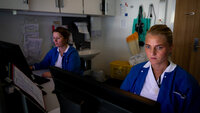
Health professionals’ expectations of e-consultations – a qualitative study
It will be more difficult to observe patients and perform clinical assessments. Nor do all patients have sufficiently good digital skills or adequate health literacy.
It will be more difficult to observe patients and perform clinical assessments. Nor do all patients have sufficiently good digital skills or adequate health literacy.
Patients and their caregivers experience less anxiety and worry. Healthcare personnel also had positive experiences with the telemedicine service.
Nurses report that the end-of-life nursing care provided in nursing homes calls on staff to provide “more of everything”, and that nurses feel they are “left to deal with everything on their own”. This situation must be taken seriously, organisationally and policywise.
From 2000 to 2006, the number of planned vaginal deliveries fell; numbers started rising again nearer 2012. Practice was probably influenced by the Term Breech Trial.
The patients accepted being asked about their alcohol habits and being referred to an alcohol and drug counsellor. The under-60s were more positive.
Women who have experienced sexual coercion have normally been subjected to other forms of violence, such as acts of dominance and isolation, or emotional, verbal or physical abuse.
Registered nurses noted a greater number of clinical signs of infection in infants with catheter-related bloodstream infections (CRBSI) than in infants without such infections. However, not all observations were documented.
Patients undergoing gynaecological laparoscopies and anorectal procedures suffered the most nausea, while those who underwent major breast cancer surgery experienced the least nausea.
The RPM tool is flexible for both nurses and patients and can have a positive impact on the relationship. But it can also cause extra work.
Whereas «PLO»-messages serve as a beneficial communication tool, they have to be supplemented with oral communication and meetings.